





Column
Ultherapy in Seoul: How Long It Lasts and How Often to Repeat It
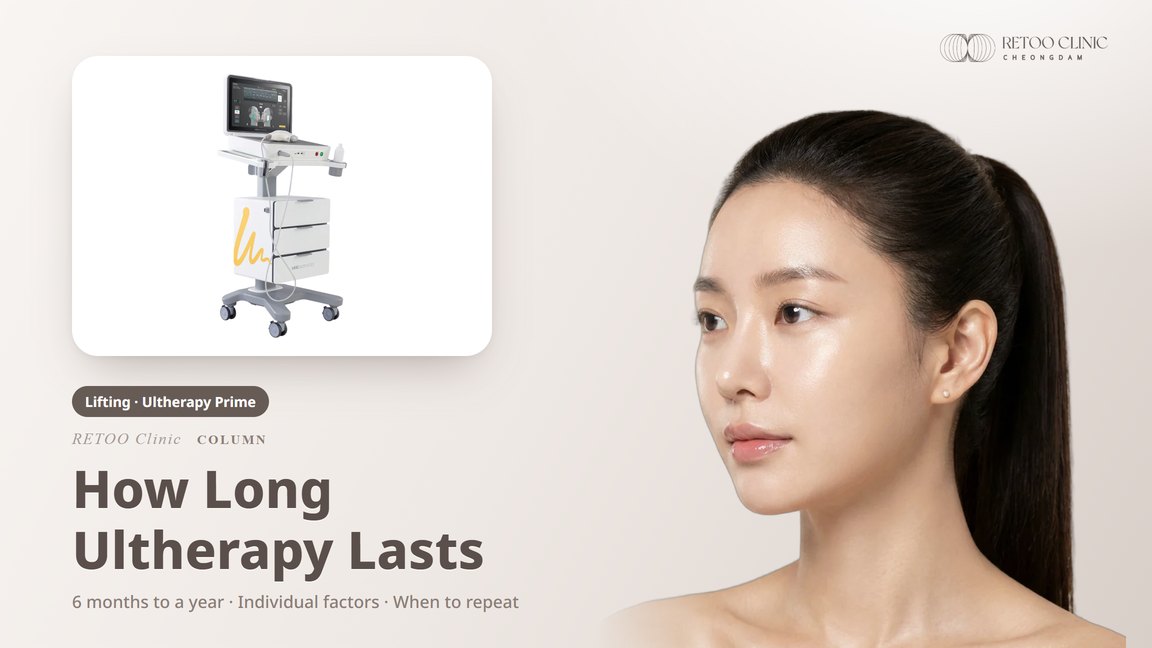
Ultherapy Prime is done in a single session. The lift develops over 2–3 months, keeps improving up to 6 months, and results on the face last a year or more. Cheongdam RETOO Clinic explains how collagen rebuilds in three phases, when you'll see a difference, why results last longer in some areas than others, and how we decide when to repeat.
Contents
- 01How long do Ultherapy results last?
- 02When will I see Ultherapy results?
- 03Why does Ultherapy last longer for some people (and some areas)?
- 04How often should you get Ultherapy?
- 05How can I make my Ultherapy results last longer?
- 06Planning Ultherapy around a trip to Seoul
- 07Can I get an assessment from photos before I visit?
- 08How does Cheongdam RETOO Clinic plan Ultherapy results and repeat timing?
How long do Ultherapy results last?
Ultherapy Prime is done in a single session, with results lasting a year or more on the face and up to 6 months on the abdomen and arms [2]. That's why Cheongdam RETOO Clinic suggests it for patients who want long-lasting results from one treatment, and why we describe the lift from a single session as lasting 6 months to a year. In a prospective study that followed face and neck patients for a year, improvement held at the 90-day, 180-day and one-year checkpoints [3]. A retrospective review of face and neck patients also found improvement through day 180 [4].
What "still lasting" means depends on what you're watching. If you focus on jawline definition, you may judge the same moment differently from someone watching loose skin on the cheeks. So before treatment, we agree with you on the change that matters most and when we'll check it, then track your progress against those same markers.
When will I see Ultherapy results?
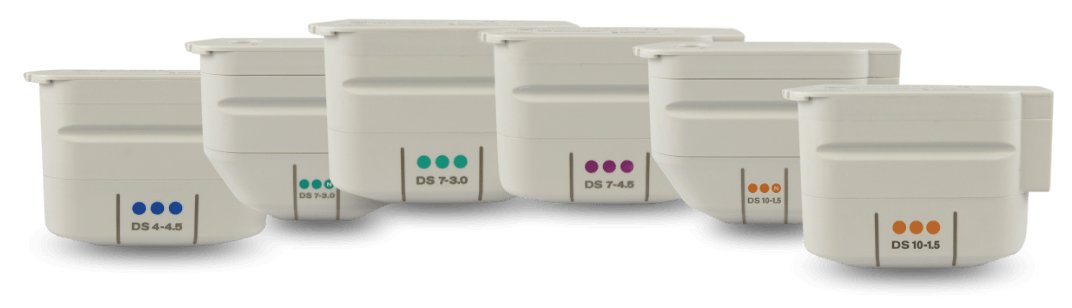
Ultherapy Prime focuses ultrasound at points 1.5, 3.0 and 4.5mm below the surface, creating thermal coagulation points (TCPs) of 60–70℃. Collagen at those points denatures and contracts immediately [1], and that contraction is the tightness you feel right after treatment. Then the body's wound-healing response takes over in three phases. During inflammation, macrophages gather and release cytokines. During proliferation, fibroblasts produce type III collagen. During maturation, type III is replaced by sturdier type I collagen and the tissue is remodeled [1].
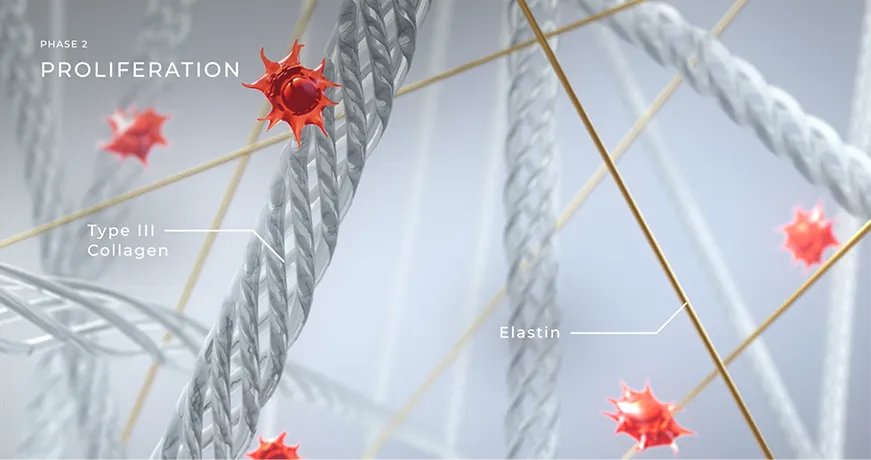
That's why the lift appears gradually over 2–3 months, with visible improvement continuing up to 6 months [1]. In a split-face study, collagen synthesis rose by 42% [1]. When researchers compared skin samples from Korean patients before treatment and 2 months after, the dermis was thicker, collagen had increased and elastic fibers were straighter and better aligned [5]. A 2025 tissue study likewise found collagen and elastin remodeling after micro-focused ultrasound [6].
- Right after treatmentCollagen contracts from heat · Redness and mild tightness
- 2–3 monthsLift gradually appears as new collagen builds
- 6 monthsVisible improvement continues up to here
- 1 year or moreHow long results last on the face
So don't judge your result from a photo taken the next morning. You may still have some redness or swelling, and the new collagen hasn't formed yet. Photos taken in the same light, at the same angle and with a similar expression make it much easier to compare at 2–3 months.
Why does Ultherapy last longer for some people (and some areas)?
It depends on the area. The manufacturer lists a year or more for the face and up to 6 months for the abdomen and arms [2]. On the face, the dermis and the SMAS (superficial musculoaponeurotic system) are tightened together. The abdomen and arms have larger stretches of skin that respond directly to weight change.
- Results last 1 year or more · Dermis and SMAS tightened together
- Results last up to 6 months · Large skin areas that respond directly to weight change
Your starting point matters too. Thin skin that has lost a lot of firmness responds differently from skin that still has good elasticity, even at the same depth and the same number of lines. And aging doesn't pause after treatment. If your skin loosens again over time, the earlier result hasn't vanished; time has simply moved on. So we look separately at how your skin compares with before treatment and at any new concerns that have come up.
How often should you get Ultherapy?
Ultherapy Prime is designed as a single-session treatment [2], and Cheongdam RETOO Clinic generally recommends repeating it every 6 months to a year. That said, we don't book repeats on a fixed calendar. The timing depends on what changed after your last session and what still bothers you now.
What we review before a repeat session
- Photos and notes from 2–3 months after your last session
- Whether the remaining concern is sagging or volume loss
- New changes from weight change or aging
- Whether a different area or depth is now needed
Say jawline sagging was your original concern, but over time hollowing in the cheeks starts to bother you more. In that case we wouldn't just repeat the same treatment; we'd look first at volume-restoring options such as filler or skin boosters. More sessions don't stretch the results proportionally, so Ultherapy Prime is planned alongside the clinic's other treatments, based on what your face actually needs.
How can I make my Ultherapy results last longer?
For a few days after treatment, avoid anything that adds heat or pressure to the skin, such as saunas or deep massage, and keep cleansing and moisturizing gentle. As part of aftercare, Cheongdam RETOO Clinic prescribes a home-care routine and walks you through it. Day to day, stay consistent with sunscreen and moisturizer. Rapid weight change shows up in your facial contours quickly, so if your jawline looks different after treatment, check your weight first.
If redness or pain persists, or you notice a lingering change in sensation such as tingling, don't write it off as normal recovery. Contact the clinic.
Planning Ultherapy around a trip to Seoul
If you're traveling from abroad, two points shape your plan. First, you may have some redness or swelling right after treatment, and saunas and deep massage are off-limits for a few days, so check your itinerary before you pick a date. Second, you won't fly home with the full lift. The tightness on day one is collagen contraction; the lift itself develops over 2–3 months, with visible improvement up to 6 months, so most of the change happens after you're home.
Because we compare your progress at 2–3 months against the markers set before treatment, ask at your consultation how and when that comparison will happen in your case. How long to stay in Seoul and when to come back for follow-up are decided at your consultation, based on your treatment and recovery. Photos you take at home in consistent light and at a consistent angle are useful for that comparison too.
Can I get an assessment from photos before I visit?
Photos can show which area bothers you, such as your jawline, cheeks or neck, and the general direction you have in mind. They can't show skin thickness, how much firmness remains, or the fat, muscle and bone structure that determine treatment areas and depths. Those are assessed in person, using the 3D precision skin analyzer and a one-on-one examination with the Medical Director. Please send photos of the area of concern only, and never photos of your passport or other ID.
How does Cheongdam RETOO Clinic plan Ultherapy results and repeat timing?
At Cheongdam RETOO Clinic, how long results last isn't something we simply measure afterwards; it's built into the plan from the start. The 3D precision skin analyzer stores data from every scan, so your skin before treatment and at each follow-up can be compared on the same terms. In a one-on-one consultation, the Medical Director considers your age, face shape, skin condition, facial bone structure, and fat and muscle to decide where and how deep to treat. During treatment, the structures beneath the skin are checked with DeepSEE imaging and a portable ultrasound device.
- 01Pre-treatment recordsSkin scanned with the 3D skin analyzer · Data stored
- 02One-on-one consultation and treatmentAreas and depths planned, then treated with ultrasound guidance
- 032–3 month comparisonChanges compared on the same terms
- 04Next stepsRepeat, combine or keep monitoring, based on remaining concerns
If you're wondering how long Ultherapy will last for you, go beyond "How many months?" at your consultation and ask, "Which change in my face should we track to tell?"
Frequently asked questions
When Ultherapy wears off, will my skin sag more than before?
No. Any loosening over time is aging that has happened in the meantime; the treatment doesn't leave your skin looser than it was before. If a change worries you, we check it against records taken on the same terms.
Can I alternate Ultherapy with radiofrequency treatments like Thermage?
Ultherapy Prime delivers heat in points to the dermis and the SMAS, while radiofrequency devices such as Thermage FLX warm the dermis over a broad area, so they do different jobs. Cheongdam RETOO Clinic sometimes plans the two together; the order and spacing are decided at your consultation.
When should I come back after Ultherapy?
We compare your progress on the same terms at 2–3 months, when the lift appears. If pain or a change in sensation lingers before then, let the clinic know right away.
Can I have Ultherapy Prime during a short stay in Seoul?
You may have some redness or swelling right after treatment, and saunas and deep massage are avoided for a few days. The lift develops over 2–3 months, so how long to stay and when to follow up are decided at your consultation, based on your treatment and recovery.
Related treatments
References
- Merz Aesthetics. Ultherapy PRIME® – Optimized neocollagenesis (three phases of collagen regeneration · lifting over 2–3 months · improvement up to 6 months · 42% increase in collagen synthesis). Official website
- Merz Aesthetics. Ultherapy PRIME® – The lift you can see (single treatment · face 1 year or more, abdomen and arms up to 6 months). Official website
- Werschler WP, Werschler PS. Long-term efficacy of micro-focused ultrasound with visualization for lifting and tightening lax facial and neck skin using a customized vectoring treatment method. J Clin Aesthet Dermatol. 2016;9(2):27-33. PMID 27047630
- Fabi SG, Goldman MP. Retrospective evaluation of micro-focused ultrasound for lifting and tightening the face and neck. Dermatol Surg. 2014;40(5):569-575. doi:10.1111/dsu.12471
- Suh DH, Shin MK, Lee SJ, et al. Intense focused ultrasound tightening in Asian skin: clinical and pathologic results. Dermatol Surg. 2011;37(11):1595-1602. doi:10.1111/j.1524-4725.2011.02094.x
- Marquardt K, Hartmann C, Wegener F, et al. Microfocused ultrasound with visualization induces remodeling of collagen and elastin within the skin. J Cosmet Dermatol. 2025;24(1):e16638. doi:10.1111/jocd.16638
Planning a consultation in Seoul?
Send us your questions about this treatment. Our team will get back to you as soon as we see your message.
How to book a consultation
- 01Send us a message
Message us on WhatsApp or LINE. Tell us which treatment or concern you are interested in and when you plan to be in Seoul.
- 02Share photos if you wish
Photos of the area of concern only (no ID documents) help us talk about the general direction. The treatment plan itself is decided at the in-person consultation.
- 03Choose a consultation time
Our team suggests available dates and times, and your booking is confirmed once you choose one.
- 04In-person consultation
At the clinic, the doctor examines your skin and explains the treatment plan, recovery and cost before any treatment.
- 05Treatment and aftercare
After the treatment, we explain how to care for your skin, including what to keep in mind for your trip home.
Clinic Hours Weekdays 10:00–19:00 · Thu 10:00–21:00 · Sat 10:00–16:30 · Closed on Sundays and public holidays
Address 5–6F, First Light Tower, 417 Dosan-daero, Gangnam-gu, Seoul · 500m walk from Exit 4, Apgujeongrodeo Station (Bundang Line), across from the Mercedes-Benz Cheongdam Showroom · Hours & Location